
Garage Door Help Center
Simple guides to help you understand and solve everyday garage door issues.

Weatherstripping / Bottom Seals
The Complete Guide to Fixing Garage Door Weatherstripping Problems (Shrinking, Wrong Size, Falling Out, or Discontinued Seals)
If you’re dealing with a garage door bottom seal that’s too short, keeps sliding out, doesn’t fit your retainer, or you simply can’t find a replacement anywhere—this guide explains exactly why it happens and the smartest long-term fix. I see this problem constantly, and most homeowners run into the same issue: the original weatherstripping is impossible to replace because the retainer on the door only fits a very specific seal that’s no longer made.This article walks you through what causes the problem, why typical fixes fail, and the simplest universal solution that will save time, money, and frustration.⸻Why Garage Door Bottom Seals Stop FittingWeatherstripping problems usually come from the retainer—not the seal itself. Many garage doors use a-retainers with special grooves designed for one specific seal profile. Once that style becomes discontinued, replacement becomes extremely difficult.Here’s what homeowners usually experience:
• The seal shrinks over time
• The original strip becomes dry, brittle, or torn
• The previous installer cut the seal too short
• The seal keeps sliding out of the track
• New seals from Home Depot, Lowe’s, or Amazon don’t fit
• The bottom of the door has factory grooves that only match rare or discontinued profilesPeople often buy multiple seals trying to match the original one—usually without success.⸻Temporary Fixes That Don’t LastSometimes installers try to secure the seal by:
• Squeezing the retainer tighter
• Using self-tapping screws
• Forcing the wrong-size seal into the grooveThese quick fixes may work for a while, but they eventually damage the retainer and make the issue worse. More importantly, they still don’t solve the root problem: the retainer itself is outdated and incompatible with modern universal seals.⸻The Best Long-Term Fix: Replace the Retainer With a Universal Aluminum OneInstead of trying to hunt down a discontinued seal, the simplest and most reliable solution is replacing the entire bottom retainer with a universal aluminum retainer—the kind sold at Home Depot, Lowe’s, and most hardware stores.This instantly solves 99% of weatherstripping issues.Why the Aluminum Retainer Works Better
• It accepts universal T-style garage door seals
• Universal seals are always in stock and widely available
• Replacements take seconds to slide in or out
• You never need to search for rare or discontinued seals again
• Aluminum is stronger and resists warping, cracking, or shrinkingEven if your garage door bottom is not perfectly flat, the aluminum retainer can still be mounted with simple adjustments or thin shims. Once installed, you’ll have an easy, permanent way to replace the seal in the future.⸻How to Install the Universal Retainer
1. Remove your existing weatherstrip
2. Unscrew and remove the old retainer
3. Install the new aluminum retainer (cut to size if needed)
4. Slide in a universal T-style seal
5. Trim the ends for a clean fitThis entire process takes most homeowners less than an hour and solves the problem permanently.⸻Final RecommendationIf your weatherstripping is shrinking, falling out, ripping, not fitting, or impossible to match with anything from the hardware store, the best long-term solution is a universal aluminum retainer with a standard T-style bottom seal. It eliminates the frustration of mismatched parts, makes future replacements easy, and ensures your garage door seals properly for years to come.
The #1 Sign Your Garage Door Spring Is Broken (Door Barely Opens)
Stop Using Your Door — This Is What a Broken Torsion Spring Looks Like
A broken garage door torsion spring is one of the most common and dangerous failures on a garage door system. The clearest sign is the door barely opens—only an inch or two—before the opener stops or reverses. This happens because the opener can’t lift the full weight of the door without the spring’s support.Here’s how to confirm it:1. Look for a Visible Gap in the SpringOn torsion springs (the long spring above the door), a break usually shows a 2–3 inch separation. If you see a gap, the spring is done.2. The Door Feels Extremely HeavyIf you try to lift it manually and it feels like lifting a dead weight, the spring has lost tension.3. Loud Bang When It BrokeMost springs snap with a gunshot-like bang when the door is closed. Many homeowners hear it but don’t know what it was.4. Cable Looks Loose or UnwoundWhen a spring breaks, cables may hang loose or fall off the drum. This is a symptom, not the cause.5. Opener Strains or Stops ImmediatelyIf the opener hums, strains, or lifts the door an inch or two and quits, the opener is protecting itself from overload.Safety NoteA broken spring is not a DIY repair. It requires the correct tools, winding bars, and torque calculations. Operating the door with a broken spring can damage the opener or cause injury.What to Do NextStop using the opener and schedule a spring replacement. A professional can restore the door’s balance and bring it back to safe operation.
That's how to Identify a Broken Extension Spring (the door tries to rise crooked)
TextExtension springs run along the sides of the garage door, stretching and contracting every time the door opens. When one breaks, the door instantly becomes unbalanced and usually won’t lift more than a few inches, or it slams shut with force.Here’s how to confirm an extension spring failure:1. One Spring Is Clearly Broken or Hanging LooseA broken extension spring is obvious:
• It may be snapped into two pieces
• It may be stretched out and no longer under tension
• It may be hanging toward the floor2. The Door Jerks, Tilts, or Lifts UnevenlyWith one side losing all lifting support, the door tries to rise crooked. The opener senses the imbalance and stops to prevent damage.3. Safety Cable May Be Loose or Whipping AroundExtension springs should have a safety cable running through them.
If the spring breaks:
• The safety cable might slacken
• You may see it dangling or swinging
If there is no safety cable, the broken spring may have flown across the garage — a major hazard.4. Door Is Extremely Heavy on One SideWhen lifting manually, one side feels like dead weight while the other side still has tension.5. Loud Snap or Whip SoundA broken extension spring usually makes a sharp crack or whip noise when it breaks. Many people think something fell in the garage.6. Opener Stops After a Few InchesJust like with torsion springs, the opener tries to lift, senses overload or uneven movement, and immediately shuts down.Safety WarningExtension springs store a huge amount of force.
A broken spring means the door is unstable.
Do not keep trying to operate the opener — it can bend the top panel or burn the motor.What to Do NextHave both extension springs replaced as a pair, and make sure the system includes safety cables. This restores balance and prevents dangerous future failures.
That's Why Spring Replacements Are NOT a DIY Job (Serious Injury Risk)
Replacing garage door springs is one of the most dangerous repairs a homeowner can attempt. Springs are under extreme tension, holding 150–300 lbs of stored force. One wrong move and that force releases instantly — causing severe injury, property damage, or a destroyed garage door system.Here’s why spring replacement must be left to a trained technician:1. Springs Store Massive EnergyTorsion and extension springs are wound or stretched with enough force to lift a full garage door.
If the bar slips…
If the wrench breaks…
If your hand is in the wrong place…
That energy releases straight into you.
This is how people end up with broken wrists, deep cuts, or worse.2. Wrong Tools = DisasterReal spring replacement requires:
• Solid steel winding bars (NOT screwdrivers)
• Vise grips
• Torque wrenches
• Proper-sized cones
Using the wrong tools causes slipping, sudden unwinding, and metal whipping around at high speed.3. Incorrect Spring Size Destroys the DoorChoosing springs is NOT just about length and color coding.
You must match:
• Wire gauge
• Spring ID
• Door weight
• Lift type
• Drum size
The wrong spring will:
• Burn the opener
• Warp panels
• Throw cables
• Make the door unsafe4. Cable and Drum Re-Alignment Requires PrecisionIf the cables are uneven by even one turn, the door will lift crooked, twist, or fall out of balance.
This leads to:
• Bent tracks
• Jammed rollers
• Panels collapsing sideways5. Extension Spring Failures Can Turn Into ProjectilesA stretched extension spring can launch across the garage if it’s mishandled or if there’s no safety cable.
This is how windows, cars, and people get hit.6. Professional Techs Carry Insurance and Safety TrainingA trained tech knows how to secure the door, measure properly, set tension safely, and test balance.
This protects:
• You
• Your property
• The lifespan of your opener and doorBottom LineSpring replacement is never worth the risk.
If a spring is broken, the safest move is to stop using the door and call a professional. One wrong step can cost far more than the repair itself.
Why Your Garage Door Is So Loud (And What Usually Causes It)
A loud garage door isn’t just annoying — it’s usually a sign that something needs attention. Over the years, I’ve worked on countless doors that screech, grind, bang, or rattle, and the causes tend to fall into a few common categories. If your door sounds like it’s working harder than it should, here’s what might be happening:⸻1. Worn or Damaged RollersThis is the most common reason.
When rollers crack, flatten, or start wobbling, they create grinding and rattling noises that only get worse with time.Tip: High-quality nylon rollers are much quieter than old metal ones.⸻2. Dry or Unlubricated HingesHinges that haven’t been lubricated in a long time can produce loud squeaking when the door moves.Use a garage-door-specific lubricant — it penetrates deeper and lasts longer.
Avoid WD-40 and silicone sprays. In my experience, silicone dries out too quickly and doesn’t provide lasting protection.⸻3. Chain Drive Opener VibrationChain-drive openers are naturally louder than belt drives.
If the chain is sagging or bouncing during operation, that can create additional noise.A small adjustment can usually help, but be careful not to overtighten the chain.⸻4. Loose HardwareGarage doors vibrate every time they move. Over months and years, that constant motion loosens bolts, hinge screws, and track brackets.A full hardware check and tightening often makes a noticeable difference in noise.⸻5. Track Alignment IssuesIf the track is bent, misaligned, or the door is rubbing metal-on-metal, you’ll hear scraping, grinding, or a deep roaring sound.Misaligned tracks can get worse quickly, so this is something that should be addressed promptly.⸻6. Opener Gear or Motor WearIf the noise seems to come from the opener itself, the internal drive gear may be worn out, or the motor may be struggling. Both can create whining, grinding, or knocking sounds.⸻Bottom LineA loud garage door isn’t “normal.” It’s usually the door telling you that something is wearing out, drying out, or coming loose.If the door becomes crooked, shakes violently, or slams down, stop using it immediately.
At that point, it becomes a safety issue, not just a noise issue.
Why Your Remote Isn’t Working (And the Real Fixes That Actually Matter)
Remote issues are one of the most common service calls I get — and 80% of the time, the problem isn’t the remote at all.
If your remote works when it wants, barely works, or stopped completely, here are the most likely causes and how I diagnose them.⸻1. Batteries (Yes… But, Not for the Reason You Think)It’s not just “dead batteries.”
Weak batteries send a weak signal — and that’s when you get the classic “I have to stand right next to the garage for it to work” issue.Fix:
Swap in a fresh set. If nothing changes, move to the next steps.⸻2. Interference (The Silent Remote Killer)This is the #1 cause when the remote suddenly stops working out of nowhere.Things that interfere with opener radio frequency include:
• LED lights (especially cheap ones)
• WiFi boosters
• Wireless cameras
• Smart-home devices
• Car chargers
• Power strips
• Even something hidden inside a wallI don’t think it’s a remote issue. It’s usually interference. LED lights on the opener, garage LEDs, Wi-Fi boosters, wireless cameras — anything like that can mess with the signal.This has happened to me on brand-new opener installs. Drove me insane. I even ordered a special antenna for one of my customers once, and it still didn’t help. I finally figured out the weirdest solution: the wall button had to be moved to a different wall. No idea what was inside that original wall, but whatever it was, it was killing the signal. Once I relocated the button, everything worked perfectly.Fix:Start with the LED lights on the opener if there is any. Replace them with regular lights.
Then unplug nearby electronics until the signal improves.⸻3. Opener Antenna ProblemsThe little antenna hanging from your opener is crucial. If it’s:
• bent
• tucked into the opener
• broken
• or missing entirely…the signal range drops fast.Fix:
Pull the antenna straight down and make sure it’s visible.⸻4. Remote Needs ReprogrammingIt happens after power surges, storms, or accidental erasing of memory.Fix:
Reprogram the remote using the opener’s “Learn” button.⸻5. Faulty Remote (Rare but Real)If all other remotes work and one doesn’t, then yes — that remote is bad.A weak transmitter or cracked solder joint can make it work one day and die the next.Fix:
Replace the remote. Simple.⸻6. Logic Board IssuesSometimes the remote is totally fine, but the opener’s logic board stops receiving signals consistently.Symptoms:
• Remote works from 1 foot away only
• Wall button works but remotes don’t
• Remotes all die at the same timeFix:
Logic board replacement.⸻7. Range Problems Caused by the Home Itself. (rare but possible)Metal gates, metal garages, steel beams, stucco with wire mesh, and tight corners can all block or reduce the signal.Fix:
Use an external receiver or aftermarket antenna to boost signal range.⸻Bottom Line from a TechIf your remote suddenly stops working or only works when you’re right in front of the garage, it’s almost never “the remote.” Something is interfering, blocking, or confusing the opener signal.If the issue is random, inconsistent, or started after installing LEDs or WiFi equipment — that’s your clue.
Garage door won’t close / Sensors Aren’t Working
Sensor problems are one of the top reasons garage doors refuse to close. If you’re stuck pressing the wall button like or holding the button down just to get the door shut, here’s what’s usually going on — based on thousands of service calls.⸻1. Misalignment (The Classic Problem)If the sensors aren’t aimed perfectly at each other, the door won’t close.
Sometimes they look aligned, but they’re actually off by a hair. The tricky part is the brackets — they can make it seem like the sensors are facing each other when the sensors themselves are not. Always check the alignment of the actual sensor lens, not just the bracket holding it.Common signs:
• Green light flickers instead of staying solid. (Sometimes they flash is so fast. It seems like it’s solid.)
• Door closes a few inches then reverses
• One sensor light is on, the other is offFix:
Nudge the sensor until the light goes solid. Tighten the wingnut so it stays put.⸻2. Loose or Damaged WiringThe small wires running to your sensors get loose at the terminals or damaged by:
• Brooms
• Bikes
• Pets
• Water
• People “cleaning up”A single loose strand can make sensors cut in and out.Fix:
Check the back of each sensor and the opener terminals. Retighten or strip and reattach the wire.⸻3. Sunlight Blinding the SensorDirect sunlight can overpower the receiving sensor (the green-light side on most brands). Even if everything is perfect, sunlight can make it think something is blocking the beam.Fix:
Shade it temporarily or angle it slightly.
If it works when shaded → sunlight is your culprit.⸻4. Dirty Lenses (More Common Than You Think)Dust, spiderwebs, and road grime can block enough of the beam to cause random reversals.Fix:
Wipe the lenses gently with a soft cloth.⸻5. Vibration IssuesIf the sensor bracket or the door track vibrates when the door starts moving, the sensor alignment can shake out of place just enough to break the beam.Fix:
Tighten the brackets or add a small shim to stabilize the sensor.⸻6. Interference or Faulty SensorsSometimes the sensor itself is failing internally.
Other times, electrical interference from LED bulbs or power issues can make the lights flicker.Symptoms:
• Sensor lights randomly turn off/on
• Only closes when you hold the wall button
• Everything “looks right” but still doesn’t workFix:
Swap sensors with a known-good set.
If the problem disappears → you found your answer.⸻7. Wrong Sensor Type InstalledMixing brands or pairing new sensors with an old opener is a guaranteed failure.Fix:
Match sensors to the opener model only.⸻Bottom Line from a TechIf your garage door won’t close and the sensors are acting weird, 95% of the time it’s:
• Alignment
• Wiring
• Sunlight
• Or old sensors dying a slow deathIf the door only closes when you hold the wall button down, that means your opener is in full safety override mode — it’s telling you something is wrong.
Why My Garage Door Opens by Itself
When a garage door opens on its own, it freaks people out — and understandably so. As a garage door tech, I’ve seen this issue many times, and it always comes down to one of a few causes. Here’s what really makes a door open by itself and how to narrow it down safely.⸻1. A Stuck or Shorted Wall ButtonThis is the #1 cause.If the wall button is shorted, full of dust, or the wires behind it are touching, the opener thinks you’re pressing the button even when you’re not.Common signs:
• Door opens randomly, even when no remotes are nearby
• Wall button feels “mushy”
• Door activates immediately when you wiggle the button or wiresFix:
Remove the wall button from the wall and disconnect one wire.
If the problem stops → the wall button or wire is the culprit.⸻2. Faulty or Exposed Low-Voltage WiringThe thin wires running from the wall button and sensors to the opener can get damaged by:
• Vibration
• Rodents
• Rust
• Nails or screws
• Kids pulling on them
• MoistureIf the wires touch each other, even briefly, the opener will think it received a command.Fix:
Check for bare copper or crushed sections. Replace the wire if needed — it’s cheap.⸻3. A Stuck Remote or KeypadA remote in a drawer or glovebox can get stuck under:
• Tools
• Bottles
• Keys
• Purses
• Trash…and start sending constant signals.Fix:
Remove the batteries from all remotes and keypads for a few hours.
If the ghost-openings stop → one of them is your problem.⸻4. Neighbor’s Remote Interference (Rare but Happens)If your opener uses older rolling-code technology, an older Chamberlain/LiftMaster/Craftsman remote from a nearby garage can interfere.It’s rare, but I’ve seen it.Fix:
Clear all codes from the opener, then reprogram only your remotes.⸻5. Faulty Logic BoardWhen the logic board is failing, it can fire off random commands:
• Door opens or closes by itself
• Lights turn on and off randomly
• Sensors behave erratically
• Remote range suddenly dropsThis is usually the cause when everything else checks out.Fix:
Replace the logic board — or sometimes it’s more cost-effective to replace the entire opener.⸻6. Power SurgesStorms, outages, and voltage spikes can cause the circuit board to glitch temporarily.
This can trigger random openings.Fix:
Unplug the opener for 30–60 seconds, then plug it back in.
If it keeps happening, the surge may have damaged the board.⸻7. Incorrect Wiring After Installation or RepairsIf someone recently:
• Installed a keypad
• Added a remote receiver
• Replaced sensors
• Moved the wall button…then mis-wiring could be sending phantom signals.⸻When to Stop and Call a TechIf your door:
• Opens and closes repeatedly on its own
• Opens in the middle of the night
• Opens immediately after you close it…disconnect the opener from power and keep the door locked manually until it’s diagnosed.Random openings are more than annoying — they’re a security risk.
Garage Door Won’t Open All the Way
When a garage door stops halfway or refuses to open fully, it’s almost always a mechanical issue, a travel-limit problem, or a force setting issue. Here’s how I diagnose it on the job — and the most common causes you’ll run into.⸻1. Broken or Weak SpringsThis is the #1 cause when a door won’t open fully.If you have a broken torsion or extension spring, the opener doesn’t have enough power to lift the full weight of the door — so it stops.Signs:
• Door lifts a foot or two, then drops
• Opener sounds like it’s struggling
• You hear a loud “bang” earlier (broken spring sound)
• You see a visible gap in a torsion springFix:
Springs must be replaced by a professional.
Never try to open the door further — that can burn your opener out fast.⸻2. Travel Limit Settings Are OffThe opener has “travel limits” that tell it exactly how far to open and close the door.
If these shift or weren’t set right, the opener will stop early.Signs:
• Door stops at the same spot every time
• Door hits the floor too early or leaves a gap
• New opener installation → limits weren’t dialed in correctlyFix:
Adjust the “Up” travel limit on the opener.
A small turn makes a big difference.⸻3. Force Settings Are Too LowEvery opener has safety force settings so it stops if it feels resistance.
If these are set too low, the opener thinks the door is “too heavy” and stops early.Causes:
• Cold weather
• Dirty tracks
• Stiff rollers
• Old opener with weak motorFix:
Gently increase the Up Force setting — but don’t max it out.
If you need to crank it high, something else is wrong.⸻4. Damaged or Binding RollersBad rollers can make the door bind halfway.Signs:
• Door jerks or stalls at random spots
• You see rollers wobbling or popping out of the track
• Rollers squeal or grindFix:
Replace damaged rollers — nylon rollers make a huge difference.⸻5. Track Obstruction or Track MisalignmentA slightly bent track or a bracket that’s shifted can physically stop the door from moving.Signs:
• Door gets stuck at the same height every time
• Track rub marks or shiny worn metal spots
• You hear grinding or scrapingFix:
Realign the track and tighten the brackets.
If the door is rubbing metal-on-metal, don’t force it — that bends things worse.⸻6. Cables Starting to Fray or UnwindFrayed or loose cables can throw the door off balance and stop it mid-way.Signs:
• One side of the door lifts higher than the other
• Door looks crooked
• You see loose cable loops at the bottom bracketFix:
Replace the cables — this is a job for a tech.⸻7. Opener Motor or Gear FailureIf the motor is weak or the internal gear is wearing out, the opener loses lifting power.Signs:
• Opener hums but barely moves
• Door lifts a bit then drops
• Motor makes grinding or clicking soundsFix:
Replace the gear kit or, if the opener is old, replace the entire unit.⸻8. Heavy or Water-Logged Wooden DoorsWood absorbs moisture and gets heavier.
Sometimes much heavier.Signs:
• Door opens fine in dry weather
• Problem shows up right after rain or humidity spikesFix:
Tighten hinges, check the seal, and consider a reinforced opener or replacing the door if it’s extremely heavy.⸻Bottom Line from a TechA garage door that stops halfway isn’t guessing — it’s telling you something is wrong:
• A mechanical part is binding
• The opener senses too much weight
• Springs or cables are failing
• Travel limits or force settings are offIf the door looks crooked, drops, or shakes violently, stop using the opener immediately — you’re minutes away from a bigger repair.
Chain Drive vs Belt Drive — Which Garage Door Opener Should You Buy? (Tech Breakdown)
Customers ask me this all the time:
“Should I get a chain drive or a belt drive opener?”Both work, both lift the door, and both can last years — but they have big differences.
Here’s the real breakdown from a garage door tech who installs these every day.⸻Chain Drive OpenersThe Classic: Strong, Reliable, LoudChain drives have been around forever. They use a metal chain (like a bike chain) to pull the door up and down.Pros:
• Strong lifting power — great for heavy doors
• Less expensive
• Long-lasting
• Handles temperature changes wellCons:
• Louder — you will hear the vibration in the house
• More shaking on older homes or wooden framing
• Chain needs occasional tightening and lubricationBest For:
• Detached garages
• Heavy wood or steel doors
• Budget-focused customers
• People who don’t care about noise⸻Belt Drive OpenersThe Upgrade: Smooth, Quiet, ModernBelt drives use a reinforced rubber belt instead of a chain. Modern belts are steel-reinforced and extremely durable.Pros:
• Very quiet — perfect for garages under bedrooms
• Smooth operation
• Low vibration
• Low maintenanceCons:
• Usually more expensive
• Belts can wear faster.
• Not ideal for extremely heavy wood doors unless you buy a stronger modelBest For:
• Attached garages
• Homes where noise matters
• Customers upgrading from old chain drives
• New smart openers with soft-start/soft-stop motors⸻Power Difference (The Truth)People online say chains are “stronger” — not really.
The motor does the work, NOT the chain or belt.The only time it matters is with very heavy wood doors, where a chain can hold up better long-term.
For normal steel doors, belt and chain lift the same.⸻Smart Features (Who Wins?)Most belt drive openers come with the newer tech:
• WiFi
• Battery backup
• Lighting upgrades
• Soft-start/soft-stop
• MyQ or Genie Aladdin ConnectChain drives often have the basics.
If you want modern features, belt drive wins 90% of the time.⸻Maintenance ComparisonChain Drive:
• Needs lubrication
• Needs chain tightening
• Louder over timeBelt Drive:
• Practically zero maintenance
• Belt lasts about 7-10 years
• Stays quiet⸻Tech Recommendation (My Honest Opinion)If your garage is attached to the house:Belt drive.
Your family will thank you.If your garage is detached or noise doesn’t matter:Chain drive is fine and saves money.If you have a heavy wooden door:Chain drive or a stronger belt-drive opener like:
• LiftMaster 87504
• LiftMaster 8500W
These handle weight better.⸻Bottom LineBoth systems are good, but they serve different purposes:
• Want quiet, modern, low maintenance? → Belt drive
• Want cheap, tough, and don’t care about noise? → Chain drive
Garage Door Maintenance Checklist (From a Garage Door Tech)
Regular maintenance keeps your garage door quiet, smooth, and safe. A garage door needs attention at least once or twice a year. Here’s a simple, reliable checklist I use on real service calls.⸻1. Inspect the RollersRollers take most of the door’s weight. When they fail, everything gets noisy.Check for:
• Cracks
• Flat spots
• Wobbling
• Rusted bearings (metal rollers)Recommendation:
Replace worn rollers immediately — nylon rollers are the quietest upgrade.⸻2. Tighten All HardwareGarage doors move hundreds of times a year. All that vibration slowly loosens everything.Areas to check:
• Hinges
• Track brackets
• Opener rail bolts
• Strut screwsA simple tightening does wonders for noise and stability.⸻3. Lubricate Moving PartsThis alone prevents 70% of noise issues.Lubricate:
• Hinges
• Rollers (the bearings, not the wheels, but 10 better to replace them if they get to a point where the bearings need lubrication)
• Torsion spring (light spray)
• Bearing plates
• Door arm connection
• Top of the rail (if chain drive)Use:
Garage door lubricant — NOT WD-40, NOT silicone.
They dry out too fast and create repeat problems.
(garage Door lubricant penetrate better than white lithium grease)
⸻4. Test the Balance of the DoorA door out of balance destroys openers.How to check:
• Disconnect the opener
• Lift the door halfway more or less.
• Let go carefully, gently.If it:
• Stays → good
• Falls or shoots up → springs are out of balance or weakeningThis is a professional repair only — never adjust springs yourself.
Note: some doors don’t have really a balance point from the fact that the weight on them are not divided equally. With that being said the goal is to Check if the door putting stress on the Opener. If it’s fairly easy to lift, everything is fine.⸻5. Test the Auto-Reverse Safety FeatureYour opener must stop and reverse when it hits resistance.Test 1: Mechanical Reverse
Place a 2×4 under the door.
The door should reverse immediately when it touches the wood.Test 2: Sensor Reverse
Block the sensors with your foot.
Door should not move at all.If either test fails → the opener needs adjustment or repair ASAP.⸻
(Optional. I don’t really do it but for some people it’s important.)6. Check the WeatherstrippingBad weatherstripping leads to dust, water, bugs, and higher energy bills.Check:
• Bottom rubber
• Side seals (the trim around the door)
• Top seal (top trim)Replace if it’s cracked, brittle, or letting in daylight.⸻7. Inspect the CablesLook for fraying, rust, or loose loops on the bottom bracket.If the cable looks damaged:
Stop using the door until a tech replaces it.
A snapped cable can cause a crooked door - off track door. or major damage. (NOT DIY)⸻
8. Listen for Unusual NoisesGrinding, banging, popping, scraping, or loud vibration are all signs of:
• Bad rollers
• Loose hinges
• Bent track
• Weak springs
• Opener issuesIf you hear new noises, something is wearing out.⸻9. Check the Opener’s Chain/Belt Tension
• Chain should have a small amount of slack
• Belt should be snug but not overtightenedToo tight → damages the motor
Too loose → causes banging/vibration⸻Recommended Maintenance Schedule
• Every 3 months: Lubrication
• Every 6 months: Hardware tightening + balance test
• Once a year: Full inspection
• Any time something sounds “off”: Stop and check immediately⸻Bottom Line from a TechA well-maintained garage door lasts longer, stays quieter, and keeps your opener from burning out.
Most maintenance is simple — but anything involving springs or cables should be handled by a professional.
Garage Door Came Off the Track? Here’s Exactly What To Do
The real causes behind a crooked or jammed garage door
When a garage door comes off its track, the entire system stops doing its job. The door leans, jams, or refuses to move because the rollers are no longer inside the rails that guide the door. And once that happens, the door becomes heavy, unpredictable, and extremely difficult to work on without the right experience and tools.If your door came off the track, here’s what you need to know before anyone tries touching it.⸻How to tell if your garage door is actually off trackYou’ll usually notice one of these things right away:* The door is sitting crooked.
* One side is higher than the other.
* A roller is hanging outside the track.
* The door moves a few inches, then gets stuck.
* The opener hums, but the door doesn’t move.
* You heard a loud pop, bang, or grinding noise right before it happened.If you see any tilt, even an inch or two, the door is off track and should not be operated.⸻The real causes behind a crooked or jammed garage doorOff-track problems usually come from something forcing the door out of its normal path. The most common situations are:* A car bumping the door, even lightly.
* Old rollers that cracked or seized up.
* Loose track hardware from years of vibration.
* A bent track caused by impact or corrosion.
* A broken cable on one side, which twists the door instantly.
* Something stuck inside the track that forces a roller out.Once a roller pops out, the door has no support on that side and immediately leans or locks up.⸻Not every “off-track” door means the roller jumped outIn many cases — and these are actually the better situations — the rollers may still be inside the track. The door is crooked and jammed, but nothing actually “jumped out.”This usually happens when:* A cable slipped off the drum
* A cable snapped
* One side of the door lost tension
* The door lifted unevenly and froze in placeWhen this happens, the door becomes crooked, the cables get loose or tangled, and the system freezes. Even though the rollers haven’t physically come out of the track, everything is jammed and unbalanced.We still call this an off-track situation because the door can’t move, the cables are no longer on the drums, and the entire system is stuck.These cases can be faster to fix, but they still require a technician to reset the cables, rebalance the door, and make sure the system didn’t get damaged.⸻Why you should never force the door to moveA garage door off track is dangerous, but it’s also extremely difficult to work on, even for a technician.When the door is halfway in the air and tilted, it blocks its own system. The springs, cables, drums, and rollers are all loaded with tension in the wrong direction. You basically have a 150–300 lb door hanging at an angle, held up by a few points that were never meant to hold that kind of weight.On top of that, most garages are tight. People store shelves, boxes, tools, and all kinds of stuff on the sides and overhead. This makes accessing the tracks or the spring system even harder. Every job is like dealing with a different type of car accident — no two situations are the same.Forcing the door to move, or trying to “push it back in,” usually bends the track, twists the door, or causes it to slam down.Do not try to operate it manually or with the opener.⸻Safe steps you can take until a technician arrivesHere are the only things you should do:
1. Unplug the opener so nobody accidentally tries to use it.
2. Keep the door closed if possible — it’s more stable that way.
3. Keep kids, pets, and anyone else away from the area.
4. Do not pull the red release cord if the door is crooked.
5. Do not try to guide the door or lift it.That’s it. Anything else risks damage or injury.⸻What professionals do during an off-track repairA proper repair is not just “putting the roller back in.” It’s a multi-step process:
1. The door is stabilized and secured so it cannot fall.
2. Tension is released in a controlled, safe way.
3. Bent tracks are straightened or replaced as needed.
4. Every roller is reset properly in the track.
5. Cables, drums, and springs are inspected and adjusted.
6. The entire door is realigned and rebalanced.
7. The opener is tested to make sure it’s not fighting the door’s weight.This is why off-track repairs require physical inspection. The tech needs to see exactly what happened and what parts were damaged.⸻How much off-track garage door repairs usually costThere is no “universal price” for off-track repairs because every situation is different, just like every car accident is different.A door can come off track in a clean, simple way…
or it can twist, bend panels, yank the cable, damage the track, or block the entire spring system.Some garages have plenty of space. Others have:* shelves on the sides
* storage on top
* walls too close to the track
* plumbing or electrical in the way
* different spring setups that affect the repairAll of this changes how difficult the repair is and how long it takes.The only honest way to give a price for an off-track repair is to physically inspect the door in person.
Anything else is guessing.⸻Quick answers to the most searched questionsCan I fix an off-track door myself?
No. It’s dangerous and difficult, especially when the door is crooked or jammed.What if the rollers are still in the track?
It still counts as “off-track.” The cables are off the drums, and the door can’t move safely.Can I pull the red release cord?
Not if the door is leaning. That’s when it can drop instantly.Why did my door come off the track?
Usually impact, worn rollers, a broken cable, or loose hardware.Will I damage the opener if I keep trying?
Yes. Forcing it burns motors and strips gears.How long does the repair take?
Realistically:It can take anywhere from 45 minutes to 3 hours.
It all depends on how the door is jammed and what has to be reset or replaced.
The Real Danger of DIY Off-Track Garage Door Repairs
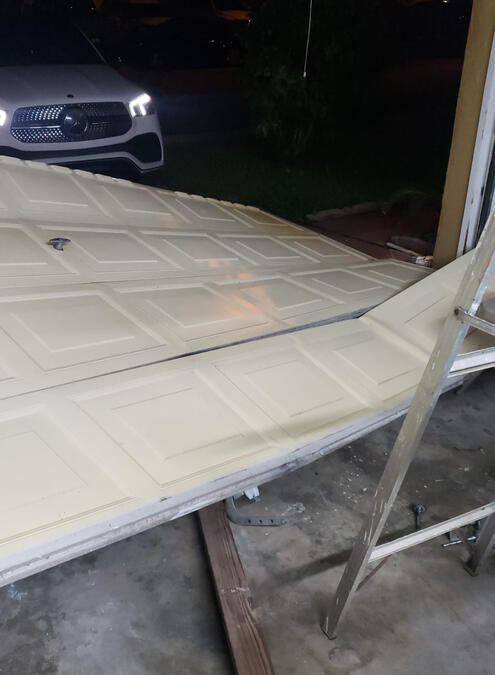
This garage door ended up completely on the floor because the homeowner tried to “help” the door move while it was off track. Once the cables slipped and the door lost balance, the entire system collapsed. A door this heavy can cause serious injury or worse. This is the exact situation you want to avoid—never force a crooked or jammed garage door.
Garage Door Not Working? Opener Runs, but the Door Won’t Move
Opener runs, but the door stays put
How to Know This Is the Problem You HaveYou press the button…
You hear the motor running…
But the garage door stays exactly where it is.No movement. No lifting. No closing.
Just the opener buzzing or humming like it’s doing something.This usually means the opener isn’t actually connected to the door anymore — or something mechanical on the door has failed.⸻Why the Motor Runs but the Door Doesn’t MoveHere are the real-world, most common causes:1. The opener is disconnected (release cord pulled)The red emergency release cord may have been pulled on accident.
Kids, guests, homeowners cleaning — it happens all the time.When the door is disconnected, the opener moves on its own, but the door stays still.4. The traveler (carriage) is strippedThis is the plastic piece on the rail that slides back and forth.
If it breaks, the opener moves but doesn’t push/pull the door.5. The internal gear inside the motor is strippedCommon on older chain-drive openers.
The motor spins, but nothing turns the chain or belt.⸻Why You Shouldn’t Keep Trying to Run the OpenerWhen the motor runs but the door doesn’t move, forcing it can:
• burn out the opener gear
• overheat the motor
• warp the rail
• create bigger problem.⸻How to Safely Check If the Door Is DisconnectedYou can do one simple check from a safe distance:
• look at the red release rope
• if it’s hanging down toward the floor, the opener is disconnected
• the trolley might be sitting in the “open” position far from the door armThat’s the ONLY thing a homeowner should check.Anything more risks injury or damage.⸻Why a Technician Must See the Door Before Giving a PriceJust like with off-track doors, every situation is different.The cause could be:
• a broken spring
• a seized bearing plate
• a stripped traveler
• a stripped internal gear
• a damaged rail
• a jammed door
• a disconnected trolley
• cables off
• a locked arm
• or multiple issues at onceTwo homeowners can describe the exact same symptom, but the repair can be totally different.This is why pricing this problem over the phone isn’t realistic.
It’s like trying to diagnose a car engine problem just because someone says, “It won’t start.”The technician must see:
• how the door behaves
• whether the system is balanced
• whether the opener is damaged
• what physically broke or disconnectedSome fixes take 15 minutes…
Others take 1 to 2 hours depending on what failed.⸻The Most Important Thing You Can Do Right NowStop using the opener.
Unplug it if needed.
Keep everyone away from the door until a tech looks at it.The sooner you stop running it, the cheaper and cleaner the repair usually is.
Garage Door Not Closing All the Way? Here’s What It Could Be
The most common reasons your door stops before touching the floor
When a garage door won’t close all the way, it usually means the travel limit is off — either someone adjusted it accidentally, or the opener lost its setting. This is one of the most common issues homeowners face, and in most cases, it’s fixable. But there are a few possible reasons behind it.Here are the most likely causes:⸻1. Travel limit out of adjustment, or the force limit is too low. (Most Common)This is the “good scenario.”
Someone might have turned the travel screw or button on the opener, and now the motor thinks the floor is higher than it actually is. So it stops early. Also, if the force limit is set too low, over time, the door can behave differently as the springs lose some lifting power. Neglected or unmaintained doors put extra stress on the system, so the force setting may need adjustment.⸻2. Opener lost its travel limitsThis is the “bad scenario.”
The opener may have lost its memory due to:
• internal board issues
• power surge
• gears getting weak
• motor sensing resistance
• a heavy doorWhen this happens, you can adjust the limits, but they won’t stay. That usually means something inside the opener is failing.⸻3. Sensors seeing somethingNot necessarily broken — just dirty, loose, shaking, or slightly moved.
Anything blocking the sensor beam can stop the door or make it go back up.⸻4. Door dragging or bindingMaybe the door is rubbing against the track, a roller is sticking, or the door is slightly crooked. The opener feels the resistance and stops early or reverse.⸻5. Something on the floorEven a small item — screw, leaf, cable, tool — can fool the opener into thinking the door hit something.⸻The problem might be something simple like a travel limit adjustment…
or it could be a sign the opener is failing.We need to see:
• how the door moves by hand
• how the opener responds
• if the limits hold or reset
• if the sensors are stable
• if the door is rubbing or binding
• if the opener is straining⸻What NOT to doAvoid turning every screw or button on the opener.
People usually make it worse by:
• over-adjusting limits
• increasing force too high
• misaligning the sensors
• causing the opener to push the door too farSome openers break because someone kept adjusting force/travel instead of fixing the real problem.
Light Coming Through the Top of Your Garage Door After Replacing Rollers? Here’s the Fix
Why your garage door won’t seal after a DIY roller replacement — and how to correct the gap fast.
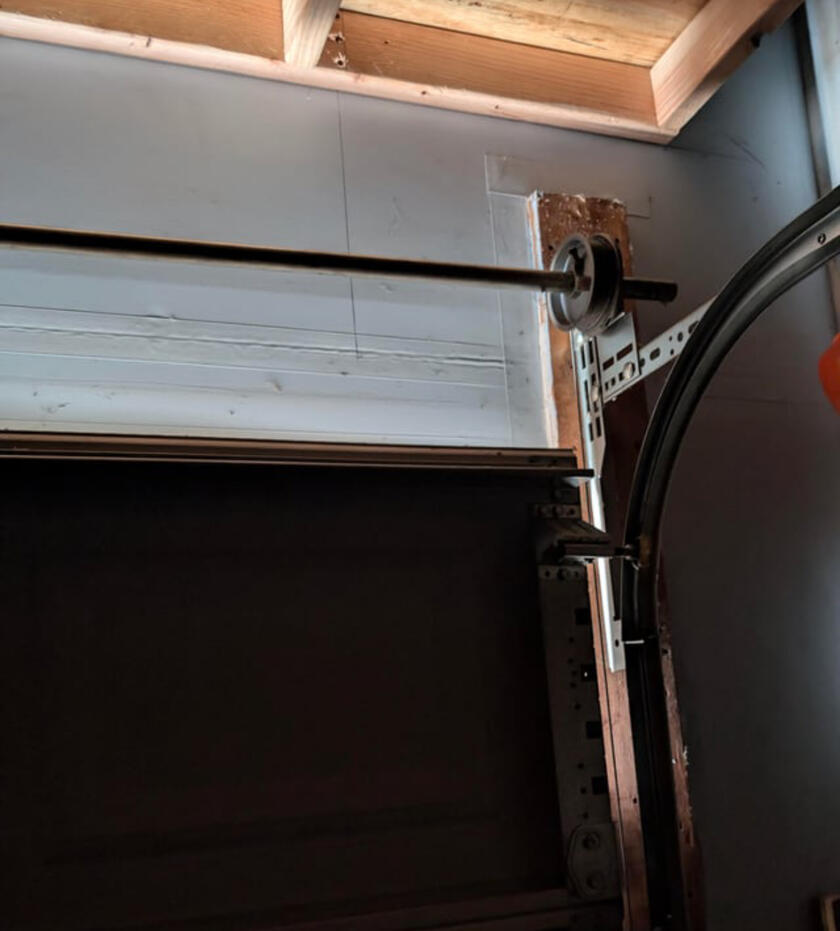
The exact fix: reposition the adjustable top hinges so the top panel seals tight again.⸻Help-Center Content (Straight to the Point)If you replaced the rollers and now see light coming through the top of the garage door, the issue is simple:
The adjustable top hinges moved, and the top section isn’t sitting against the wall/header anymore.Here’s exactly how to fix it:⸻How to Fix the Top Gap (Step-by-Step)1. Close the garage door fullyYou need the door closed to set the correct position.2. Go to the adjustable top hinges (one on each side)These hinges control how far the top section sits toward the wall.3. Loosen the screws and nuts on the adjustable hingeDo NOT remove them — just loosen enough so the hinge slides.4. Push the top section firmly against the wall/headerUse one hand or your shoulder. The goal is to force the top panel tight against the weather seal.5. While holding it tight, re-tighten all the screws and nutsThis locks the section in the correct position.6. Check from insideThe light should be gone. If there’s still a small gap, repeat and push the section tighter.⸻Why This HappensDuring roller replacement, the top section shifts even slightly. When the adjustable hinges aren’t in the correct position, the top panel floats away from the wall, creating a visible light gap.
Garage Door Closing Too Fast? The Real Causes and How to Fix It Safely
Learn why your garage door is slamming shut and the exact steps to diagnose broken springs, cable issues, and opener problems
A garage door that drops fast, slams shut, or feels uncontrollable is one of the most dangerous garage door problems. This issue is almost never the opener — it’s almost always a counterbalance failure, which means the door is no longer supported by the springs or cables.Below is the clean, no-fluff guide.⸻Why Your Garage Door Is Closing Too Fast1. Broken Torsion Spring (Most Common)If you hear a loud bang and now the door drops quickly, the torsion spring snapped.
Signs:
• The door is extremely heavy
• Gaps in the spring coil
• Opener struggles or can’t lift the door2. Broken or Detached Extension SpringFor systems with side springs:
• One side breaks
• Door slams shut and becomes uneven
• Safety cables may be the only thing holding pieces together3. Cable Off the Drum or Frayed CableIf a cable comes off the drum or snaps:
• One side of the door drops faster
• Door becomes crooked or unstable
• The opener may shake the door violently4. Door Disconnected From the OpenerIf the red release rope was pulled, the opener is no longer controlling the door.
With no spring support, the door free-falls.5. Spring Tension Incorrect or Not Set ProperlyIf someone recently replaced springs and the door now drops:
• Wrong springs installed
• Under-tensioned springs
• Incorrect wire size or spring length⸻Why This Is DangerousA 150–600 lb garage door falling fast can:
• Destroy the opener
• Bend panels
• Break hinges and rollers
• Cause serious injuryDo not keep using the door or the opener until it’s fixed.⸻How to Diagnose the Issue (Safe Visual Check Only)1. Look at the torsion springs above the doorDo you see a gap? That’s a broken spring.2. Check if one side of the door is lowerCrooked door = cable problem or extension spring failure.3. Check if the opener is connectedIf the red rope is pulled and the trolley is separated, reconnecting isn’t enough —
The spring system still must work correctly.4. Lift the door manuallyIf it feels heavy at all, the spring system is compromised. A working spring system lets you lift the door with one hand.⸻The FixSpring and cable work is not DIY-safe.
The only correct fix is:
• Replace the broken spring(s)
• Reinstall or replace damaged cables
• Reset tension exactly to factory balance
• Verify door balance or make sure it doesn't put stress on the opener. If you're struggling to open the door, the opener is struggling as well.This requires the right tools, correct spring sizes, and safety handling.⸻SummaryIf your garage door is closing too fast, the counterbalance system has failed.
Broken spring, broken cable, or the door was disconnected from the opener.
Do not operate the door until repaired to avoid damaging the opener or causing injury.
Light Showing Around Your Garage Door? Here Are the Real Causes and Fixes
How to eliminate gaps at the top, sides, and bottom of your garage door for a proper seal and secure fit.
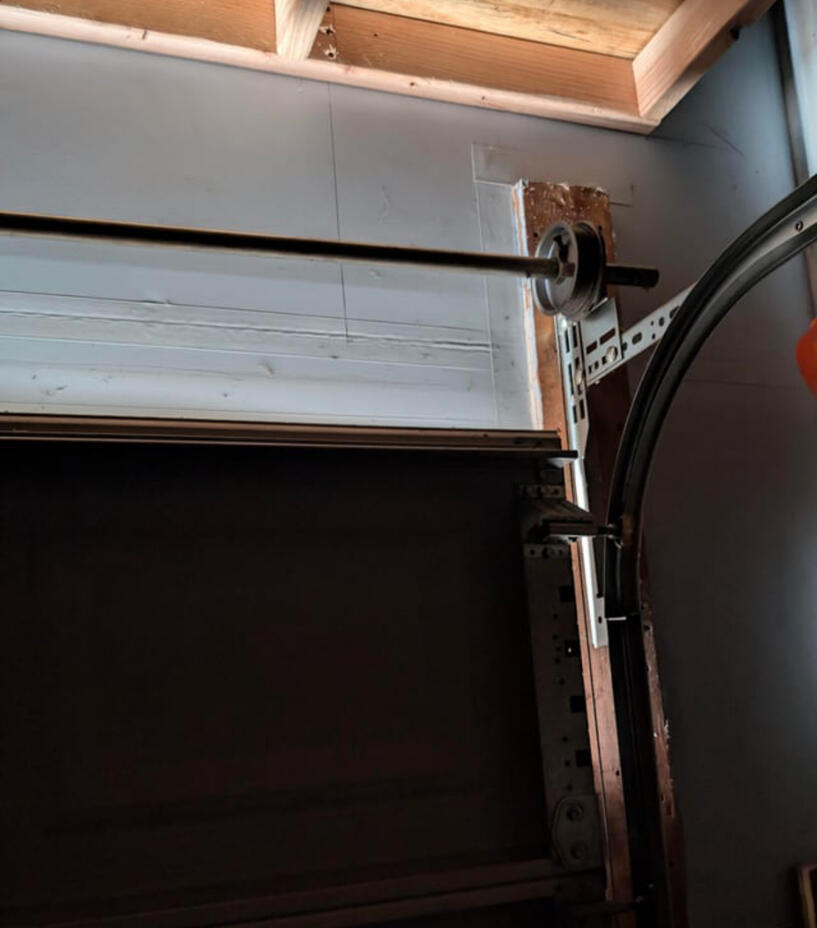
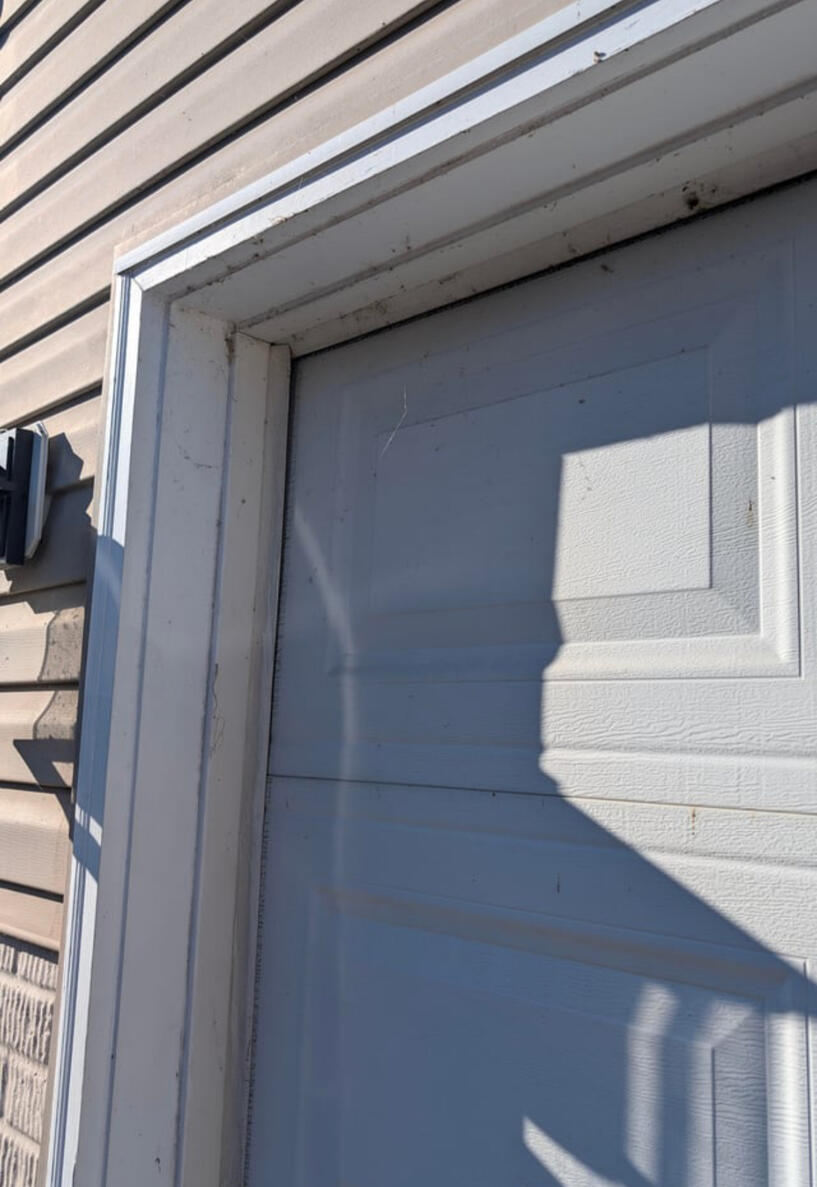
Seeing light coming through the top, sides, or bottom of your garage door means the door is not sealing against the frame. This is usually caused by misalignment, worn weather seals, or incorrectly positioned hinges or tracks.Below is the exact troubleshooting guide.⸻Most Common Causes of Light Around the Garage Door1. Top Section Not Pulled Tight to the Header (Most Common)The adjustable top hinges are not set correctly.
When the top hinges shift forward or backward, the top panel won’t sit against the top seal, causing light to show.2. Worn Side WeatherstrippingSide vinyl seals dry out, stiffen, or curl away from the door.3. Vertical Tracks Leaning Away From the JambIf the tracks were bumped or loosened:
• The door won’t sit tight against the side weatherstrip.4. Bottom Seal or Retainer Worn OutA compressed or torn bottom rubber allows daylight and air to enter.5. Uneven Floor or Concrete SettlingEven with a good seal, a low spot in the concrete creates a gap.⸻How to Fix Light at the Top of the Door (Most Important Fix)1. Close the garage door fully.2. Loosen the screws on the adjustable top hinges.These control how the top panel presses into the header.3. Push the top section firmly against the wall/header.Use your hand or shoulder.
This forces the door into its correct sealing position.4. Tighten all screws while holding the section against the wall.This eliminates the top light instantly when done correctly.⸻How to Fix the Light on the Sides1. Inspect side weatherstrippingIf it’s:
• Hard
• Cracked
• Curled
• Not touching the door→ Replace it.2. Check track alignment
• Loosen the lag bolts holding the vertical tracks
• Push the tracks slightly toward the door until the seal makes contact
• Tighten boltsTracks should not pull the door too tight — just enough to seal evenly.⸻How to Fix the Light at the Bottom1. Replace the bottom rubber sealIf you see:
• Flattened rubber
• Cracks
• Gaps on one sideIt needs replacing.2. Check the bottom retainer shapeA bent aluminum retainer won’t hold the seal correctly.3. Address low concreteIf the floor is uneven:
• Install a taller bottom seal
• Or use a garage door threshold ramp glued to the floor⸻When You Should Call a TechnicianCall for service if:
• The door becomes crooked
• You find worn cables or broken hinges
• You can’t get the top to seal after adjusting
• Light changes depending on the door height (spring or track issue)⸻SummaryIf you see light around your garage door, the door is not sealing due to:
• Wrong hinge position
• Misaligned tracks
• Worn weatherstripping
• Damaged bottom seal
• Uneven floorThe most common and most effective fix is adjusting the top hinges so the top panel pulls tight to the header.
Garage Door Opener Blinking Light Codes — What They Mean and How to Fix Them
LiftMaster, Chamberlain, Craftsman, and Genie opener blinking lights explained with real, fast troubleshooting steps.
When your garage door opener blinks a certain number of times, it’s telling you exactly what’s wrong. These blinking codes point to sensor issues, force problems, travel limits, motor failures, and more.Below is the no-fluff, most accurate breakdown of the most common blinking light codes used by major brands.⸻Why Garage Door Lights BlinkA blinking light is a diagnostic warning.
The opener detects a safety or operational failure and locks itself out to prevent damage or injury.All brands use the same principle:
• Fast blinking = sensor/obstruction issue
• Specific blink counts = internal error (board, limits, motor, force settings, RPM sensor)⸻LiftMaster / Chamberlain / Craftsman Blinking Codes(These brands share the same logic board system.)1 BlinkSafety sensor wire open / broken.
Check the sensor wiring from the opener down to both sensors.2 BlinksSensor wire is shorted.
Two wires are touching or pinched. Repair or replace.3 BlinksDoor control (wall button) shorted or bad wire.
Disconnect the wall button wiring to test.4 BlinksTravel limits not set or lost.
Reprogram the up/down limits.5 BlinksRPM sensor failure (motor isn’t reading movement).
Could be:
• Bad RPM sensor
• Stripped gear
• Jammed door
• Motor malfunction6 BlinksMotor circuit or internal board failure.
Opener usually needs a logic board.10 Blinks (LED on Sensor)Safety sensor blocked or misaligned.
The door won’t close. Align the sensors until both lights are solid.⸻Genie Opener Blinking Codes (Most Common)Red LED Flashes – FastSafe-T-Beam sensor problem.
Misalignment or blocked sensors.1 FlashOpen limit not programmed.
Reprogram door travel.2 FlashesClose limit not programmed.
Reset travel limits.3 FlashesObstruction or force issue.
The door is too heavy or binding.4 FlashesMotor overload/temperature shutdown.
Wait, fix the binding, or reduce force.5 FlashesRPM sensor problem.
Motor not turning or sensor failed.⸻Universal Troubleshooting Steps (No Guesswork)1. Check the safety sensors first90% of blinking light issues are from:
• Misaligned sensors
• Loose sensor wire
• Broken wire at the sensor bracket
• Sunlight blasting the receiver2. Make sure the door is not bindingIf the door is heavy or crooked, the opener will blink and reverse.3. Reset travel limitsIf the limits are off, the opener will think the door is hitting an obstruction.4. Check for stripped gears or broken trolleysA motor that runs, but the door doesn’t move = internal gear or trolley failure.5. Look at the RPM sensorIf the opener blinks and stops mid-way, the RPM sensor can’t read movement.6. Inspect wiring at the opener headMost wiring issues happen right at the terminals.⸻When You Need a TechnicianCall a pro when:
• The opener shows 5 or 6 blinks (RPM/motor/board).
• You replaced sensors, and the blinking continues.
• The door is heavy or crooked (spring/cable problem).
• You hear grinding from the opener.⸻SummaryBlinking light codes are the opener’s way of telling you what’s wrong.
Most codes point to:
• Sensor problems
• Wiring issues
• Travel limits
• RPM/motor failuresFix the cause, not the symptom, and the opener will reset automatically.
Garage Door Jerks or Shakes When Opening or Closing – Real Causes & Fixes
Technician-Proven Checklist for Both Torsion and Extension Spring Systems
When a garage door shakes, jerks, or vibrates, something in the lift system or hardware is binding, loose, or failing. These are the real causes, listed the way an experienced tech checks them.⸻1. Rollers Worn, Flat-Spotted, or BindingMost common cause — torsion & extensionSymptoms:
• Jerking
• Vibration
• Rumbling noiseIssues include:
• Cheap plastic rollers
• Bent shafts
• Flat spots
• Wobble
• Rusted bearingsOne bad roller can shake the entire door.⸻2. Hinges Worn or Loose (Hinges use screws, not rivets)If a hinge is:
• Cracked
• Bent
• Loose
• Has worn screw holes…the panels shift, and the door jumps.Middle hinges are the most common offenders.⸻3. Tracks Misaligned, Too Tight, or BentTrack problems cause roller binding:
• Tracks squeezed inward
• Tracks pulled too far out
• Non-parallel verticals
• Horizontal track not level
• Bent or hit trackSymptoms show depending on where the misalignment is.⸻4. Cables Frayed, Uneven, or Not Riding CorrectlyApplies to both torsion and extension systems.If a cable is:
• Frayed
• Stretching
• Wrapped unevenly on the drum
• Sitting on the wrong groove
• Loose on one side…one side will lift differently → door jerks.⸻5. Extension Springs – Weak, Mismatched, or StretchedExtension systems shake when:
• Springs don’t match
• Springs are too weak
• Springs are worn out
• Springs are stretched with age
• Spring bearings/pulleys are failingMost overlooked cause:
👉 Worn pulleys — huge source of jerking.⸻6. Bad Bearings or Pulleys (Extension Systems)If a pulley bearing drags or seizes, it creates instant jerking on the lift.Check:
• End pulleys
• Center pulleys
• Pulley brackets
• Cable angles⸻7. Bent Door Sections or Damaged StilesIf a section is bowed or stressed:
• Roller line shifts
• Hinges twist
• Door shudders under loadCommon after vehicle impacts or metal fatigue.⸻8. Opener Rail or Trolley ProblemsNot always the cause, but if they are:
• Bent rail
• Loose opener header bracket
• Worn trolley
• Chain or belt tension is wrongThese create vibration that transfers into the door.⸻9. Drum or Shaft Issues (Torsion Systems)For torsion systems:
• Loose drum set screws
• Drum out of round
• Shaft flexing or bent
• Cable slipping from the drum wearUneven drum movement = shaking door.⸻Clean Technician SummaryReal-world causes of a jerking/shaking garage door:
1. Rollers worn
2. Hinges loose/cracked
3. Track alignment problems
4. Cable issues
5. Extension springs worn/mismatched
6. Bad pulleys (extension)
7. Bent section or stiles
8. Opener rail/trolley issues
9. Drum/shaft issues (torsion)No fluff. No myths. Just field-accurate.
Garage Door Opens but Won’t Close With the Remote — Real Causes and Fixes
Safety Sensors Not Aligned or Too Weak (Most Common Cause)
When your garage door opens normally but won’t close with the remote, the opener is blocking the close command for safety reasons. This is almost always a sensor issue, lockout, or signal interference — NOT the remote itself.Below are the exact causes your technician checks, in the correct order.⸻H2: 1. Safety Sensors Not Aligned or Too Weak (Most Common Cause)
[3:23 PM, 12/2/2025] TAMIR VARDI: Garage Door Opens but Won’t Close With the Remote — Real Causes and FixesIf your garage door opens normally but won’t close with the remote, the opener is blocking the close command for safety reasons. This is almost always caused by sensor problems, lockout settings, or signal issues — not the remote itself.Here are the real technician causes in the correct order:⸻1. Safety Sensors Not Aligned or Weak (MOST COMMON)If the sensors are:
• Slightly misaligned
• Flickering
• Weak green LED
• Dirty
• Loose
• Hit by sunlight…the opener WILL NOT close using a remote.You must see both LEDs solid — not “almost solid,” not “looks solid from far” — solid.⸻⚠️ Important: The Sensor Bracket Can Trick YouTechnicians see this all the time:The bracket looks straight, but the sensor itself is NOT.The plastic sensor can be:
• Bent
• Twisted
• Loose
• Mis-seated
• Rotated slightly…and the bracket that holds it makes the sensor look like it’s pointing at the other one — but it isn’t.You MUST look at the actual sensor lens, not the bracket position.Fix:
Loosen the wingnut → aim the sensor lens directly at the opposite lens → tighten again.
Ignore the bracket’s angle — it lies.This single issue causes more “door won’t close” calls than anything else.⸻2. One Sensor Has Power, the Other Doesn’tSigns:
• One LED lit, the other dead
• Sensor wires ripped, loose, or cut
• Wires touching metal
• Corroded wire connectionsNo power = no close command from remote.⸻3. Wall Button Closes the Door, Remote Doesn’tIf the wall button closes the door every time →
It is 100% a sensor or sensor-wire problem.The wall control bypasses sensor restrictions; the remote does NOT.⸻4. Lock Feature Activated (LiftMaster/Chamberlain)If LOCK is ON:
• Remotes open the door
• Remotes CANNOT close the doorFix:
Hold the LOCK button on the wall control for 3–5 seconds.⸻5. Remote Signal InterferenceIf the remote sometimes works only up close:Possible causes:
• Cheap LED bulbs are interfering with RF
• Wireless devices nearby
• Metal objects blocking the antenna
• Weak remote batteryReplace bulbs with opener-rated LEDs.⸻6. Shorted Sensor WiresIf wires are:
• Stapled too tight
• Cracked
• Shorting against metal
• Twisted incorrectly…the opener detects a fault and blocks remote closing.⸻7. Bad Sensor or Faulty Sensor CircuitSigns:
• LEDs behave inconsistently
• One LED seems “weak.”
• Works sometimes, fails other timesYou may need:
• A new sensor pair
• A new harness
• Logic board repair/replacement
(Rare, but real.)⸻8. Remote Needs Reprogramming (Least Common)Only after ruling out sensor issues.Programming is done through the “LEARN” button on the opener.⸻Tech Summary (Straight, No BS)If your garage door opens but won’t close with the remote, it is almost always:
1. Sensors misaligned
2. Sensor LEDs flickering
3. Bracket makes sensors “look aligned” when they’re NOT
4. Broken/loose sensor wires
5. Lock button ON
6. Remote interference (LED bulbs, weak battery)
7. Faulty sensor or logic boardIf the wall button closes the door → it’s the sensors. Period.
Garage Door Bounces Slightly When Opening or Closing
Why It Happens and When You Should (and Shouldn’t) Worry
A garage door that bounces a little during opening or closing is extremely common. In most cases, it’s not dangerous — it usually comes from installation geometry, arm setup, or opener positioning. Unless the bouncing is aggressive or loud, it’s usually not a major concern.Below are the real technician causes.⸻1. Opener Arm Position (MOST COMMON)If the opener arm is:
• Too angled
• Installed too low or too high on the top section
• Not set at the correct straight/offset position…the opener creates a slight “jerk” or “bounce” at the beginning or end of travel.This is a very common minor bounce cause and does not require immediate repair unless severe.⸻2. Opener Installed Too High or Too LowThe opener rail height affects the travel path.If the unit is:
• Mounted too high
• Mounted too low
• Not level…the door may bounce slightly as the opener corrects its geometry during travel.This is a setup issue, not a “broken parts” issue.⸻3. Improper Angle or Geometry of InstallationA door can bounce if:
• The rail is angled too much
• The header bracket is too far forward/back
• The assembly is pulling the door at the wrong angleMost homeowners will never notice this, and the opener still works fine.⸻
4. Hinges or Sections Flexing Slightly Under LoadEven properly installed doors flex.Minor bounce can come from:
• Section flex
• Hinges shifting slightly during travel
• Top section movement when the arm transitions from push to pull
• Standard door movement under tensionIf the door is not shaking violently, this is normal.⸻5. Rollers or Tracks Not Perfectly SmoothNot a “broken” situation — but small imperfections cause small bounces:
• Slightly bent track
• Track bind at one point
• Old or stiff rollers
• Debris in the trackThis causes micro-hesitations that feel like a bounce.
If the door runs, seals, and stays aligned → safe.⸻6. Spring Tension Slightly Off (But Still Functional)A small bounce can come from:
• Slightly uneven tension
• Extension springs not pulling evenly
• Torsion springs not perfectly matchedIf the bounce is mild and the door stays balanced → not an urgent issue.(Not dangerous — only incorrect balance is dangerous, not light bouncing.)⸻7. Minor Opener Sensitivity/Travel ReactionsSome openers create a natural “dip” or micro-jerk:
• Right when they start
• Right when they hit the travel limitsThis is especially common with:
• Genie screw drives
• Older LiftMaster chain drives
• Doors with heavy top sectionsNormal behavior unless the bounce is strong.⸻When You Should NOT WorryYou do not need service if:
• The bouncing is slight
• The door moves smoothly overall
• There’s no shaking, grinding, or slamming
• The opener doesn’t reverse or stop on its own
• There’s no loud bang, pop, or aggressive vibrationA tiny bounce = normal and safe.⸻When You SHOULD Get It CheckedCall a tech if the bounce is:
• Aggressive
• Increasing over time
• Paired with loud noises
• Causing the opener to stop or reverse
• Shaking the whole door systemThat indicates a mechanical issue, not normal movement.⸻Technician Summary (Straight Talk)A small bounce is usually caused by:
1. Opener arm angle
2. Opener height/position
3. Installation geometry
4. Normal flexing of the door
5. Slight track/roller tight spots
6. Mild spring tension difference
7. Opener travel transitionsIf it’s not aggressive, you don’t need to lose sleep over it.
Most doors bounce a little. It’s normal.
Why Your Chain Is Sagging on One Side & What It Means
Understanding Uneven Chain Sag on a Chain-Drive Garage Door Opener
It is possible for a garage door opener chain to sag more on one side than the other. Every chain-drive opener has a tighter side and a looser side, but if the sag on one side has increased or appeared suddenly, that usually points to a mechanical issue inside the opener.⸻A Little Chain Sag Is NormalA chain should not be tight.
A perfectly tight chain puts too much stress on:
• The metal gear
• The sprocket shaft
• The internal bearingA little sag is healthier and normal.
But new or excessive sag on one side is a warning sign.⸻When Chain Sag on One Side Becomes a ProblemIf one side suddenly starts sagging more than before, that usually means something inside the opener is wearing out.⸻1. Black Metal Powder on Top of the OpenerIf you see black metal dust, that means internal metal parts are grinding:
• Worn metal gear
• Worn sprocket shaft
• Failing internal bearing
• Misalignment forcing metal-to-metal wearBlack metal powder = the gear or sprocket assembly is failing.⸻2. Sprocket Appears Slightly TiltedIf the sprocket is leaning or not perfectly straight, the internal support is failing.
This causes the chain to sag more on one side because the sprocket is no longer centered or stable.⸻3. Opener Sounds Like It’s Working HarderA strained, grinding, or labored sound usually means the gear is slipping.
This goes hand-in-hand with increased sag on one side of the chain.⸻Bottom Line
• Some sag is normal.
• New or increased sag on one side is NOT normal.
• Black metal dust + tilted sprocket + labored sound = failing metal gear or sprocket assembly.Fixing it early prevents total gear failure, where the motor runs but the chain won’t move.
Garage Door Opening or Closing Too Slow
Why Your Garage Door Moves Slower Than Normal & How to Fix It
A garage door that suddenly starts opening or closing too slow usually means something is dragging, binding, or putting extra resistance on the opener. The opener can only move as fast as the door allows — so when something slows the door down, the opener slows down with it.Below are the real, most common causes and the exact things a tech would check.⸻1. Track Friction or MisalignmentIf the tracks are slightly bent, too tight, or rubbing the rollers, the door won’t glide smoothly.
Even a small misalignment creates drag.Fix:
Check for dents, rubbing points, or tight spots in the track.
⸻2. Opener Speed Setting (Some Models)Some Genie, Linear, and newer LiftMaster models have internal speed settings.
If it defaults to “low speed mode,” the door crawls.Fix:
Check the opener’s control board or menu for speed options.⸻3. Door Springs Losing TensionA door with weak springs won’t balance correctly.
When the springs lose lift power, the opener must do more work, which slows everything down.Fix:
Have springs inspected or re-tensioned/replaced.⸻4. Cold Weather Stiffening (Real Issue)In cold weather, grease thickens, metal contracts, and rollers stiffen.
Doors run much slower in cold months.Fix:
Proper lubrication and roller maintenance help.⸻5. Opener Motor Getting WeakOlder openers can lose power over time, especially AC units.
Once internal components wear, the opener simply can’t move the door at normal speed.Fix:
Check the motor load, listen for strain, and consider replacement if heavily worn.⸻9. Heavy or Unbalanced DoorA heavy door can slow the opener.
The opener isn’t designed to lift a heavy door — just guide it.Fix:
Test the balance by lifting halfway by hand.⸻Bottom LineA garage door running slow is almost always caused by friction, weak springs, or a struggling opener.
Fix the cause early, and you avoid burning out the opener motor.
Garage Door Won’t Close Because Sunlight Hits the Safety Sensors
How Sun Interference Blocks the Garage Door Sensors & What Actually Fixes It
Direct sunlight can absolutely blind garage door safety sensors. When the sun hits the sensors at the right angle, the system thinks something is blocking the door — so it refuses to close unless you hold the wall button.Sun shields usually help, but in some cases the light bounces in at angles the shield can’t block. Here are the real fixes that actually work, (especially for garages with reflective epoxy floors)Best Fix for Sun Interference: Swap the SensorsDirect sun usually blinds the receiver sensor. (the one that turnd off when blocked)
The transmitter sends the invisible beam, and sunlight doesn’t affect it the same way.Swapping sides puts the receiver in a shaded or better position in most cases, which solves the problem immediately.⸻How to Swap the Sensors (Safe & Simple)
1. Unplug the opener.
No power, no surprises.
2. Loosen the wingnuts/nut on the sensor brackets so you can slide the sensors out.
3. Disconnect or cut the wires.
Each sensor has two wires.
• Take a quick photo before touching anything.
• Disconnect wire nuts or clips.
4. Move the transmitter to the opposite side, and move the receiver to the other bracket.
5. Reconnect the wires exactly the same way:
white to white, striped to striped.
6. Slide them back in and tighten the wingnuts.
Aim them straight at each other.8. Plug the opener back in. 7. Check the LEDs:
• Receiver light solid = aligned.
• If it flickers, adjust slightly. and test the door.Bottom LineYour sensors aren’t broken — they’re getting blinded by the sun.
shade the lens, or swap them if necessary.
HomeLink Not Working With Your New LiftMaster 3.0? Here’s What I’ve Seen as a Tech
Why Some Cars Won’t Pair - and the Safer, More Reliable Options
If your HomeLink refuses to program to a new LiftMaster 3.0 opener, trust me, you’re not doing anything wrong. I work on garage doors all the time, and this is one of the most common frustrations I see with the newer motors.On the older Security+ 2.0 openers, we had a really simple fix: the HomeLink Repeater Kit.
Most people don’t even know what that is, but basically, it was a little translator box you plugged into an outlet in the garage. It took the older HomeLink signal from the car and converted it into something the opener could understand. I used it on tons of jobs, and it solved the problem almost every time.But with the new LiftMaster 3.0 motors, that kit doesn’t work anymore.
The communication system changed, and the repeater can’t translate the new protocol. So if you’ve got an older or mid-year vehicle, your HomeLink may simply never pair with a 3.0 opener — no matter how many times you try the programming steps.Only certain newer vehicles with the updated HomeLink hardware will connect to these new motors.⸻What I Recommend to Customers NowTo be honest, with the way 3.0 works, the easiest and most reliable options are:
• Use the small LiftMaster keychain remote
It’s simple, fast, and doesn’t depend on the car’s electronics. I usually tell customers to keep it on their keys or hidden in the car.
• Use the LiftMaster / myQ app
It works every time and avoids the whole HomeLink issue completely.
A keychain remote is safer because you can hide it, remove it, or keep it with you — not stuck permanently in the dashboard
LiftMaster Wall Switch Blinking Red Then Yellow (Amber)
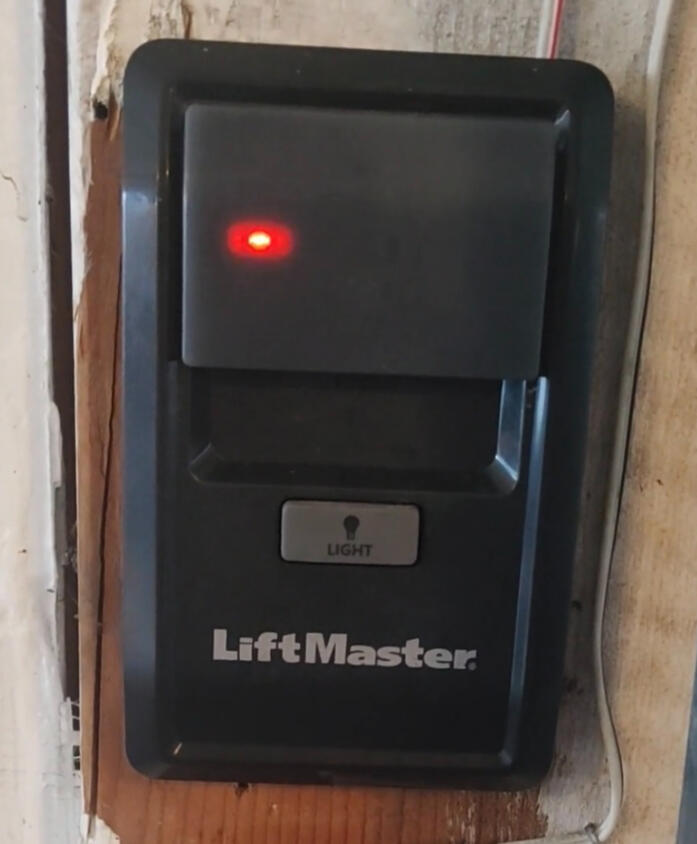
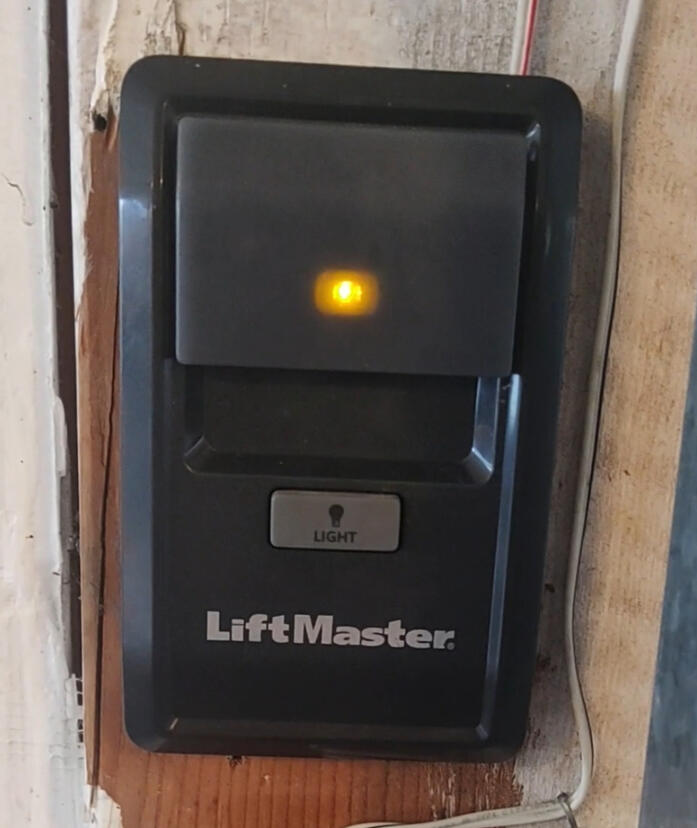
OverviewIf your LiftMaster wall control shows a blinking red LED followed by a yellow (amber) LED, the opener has detected a safety or communication fault. The system is preventing normal operation until the issue is resolved.This is common on LiftMaster MyQ and Smart Control Panel models.⸻What the Lights MeanRed LED (Blinking)
• A fault has been detected
• Door operation is restricted for safetyYellow / Amber LED
• Opener has entered diagnostic or protection mode
• Waiting for the problem to clear before resuming normal operation⸻Most Common Causes1. Safety Sensor (Photo Eye) ProblemThis is the most frequent cause.
• Sensors are misaligned
• Sensor lenses are dirty or blocked
• One or both sensor LEDs are blinking or offBoth sensors must show solid lights (no blinking).⸻2. Damaged or Shorted Sensor Wiring
• Staple through wire
• Pinched or cut wire
• Corrosion at connections
• Poor splicesAny wiring fault will trigger a safety lockout.⸻3. Wall Control or Wall Wiring Failure
• Loose or crossed wall control wires
• Defective wall button
• Short in the low-voltage wall wiringA bad wall control can trigger false error signals.⸻4. Failing Logic Board (Less Common)If all sensors and wiring test good, the opener’s logic board may be failing, especially on older LiftMaster units.⸻Step-by-Step TroubleshootingStep 1: Check Safety Sensors
• Verify both sensors are aligned
• Clean the lenses
• Confirm both LEDs are solid ONIf either light is blinking or off, fix this first.⸻Step 2: Inspect Sensor Wiring
• Follow the wires from the sensors to the motor head
• Look for damage, staples, or loose terminals
• Repair or replace damaged sections⸻Step 3: Test the Wall Control
• Remove the wall control from the wall
• Check for loose or crossed wires
• Temporarily disconnect the wall control
• If the door works with remotes only, the wall control or wiring is faulty⸻Step 4: Evaluate the Logic Board
• If sensors and wiring are confirmed good
• And the error persists
• The logic board is likely defective and may need replacement⸻Blink Code Identification (Important)Some LiftMaster units use specific red blink patterns (example: 3 blinks → pause → 3 blinks).If your wall control shows a repeating blink count:
• Count the red blinks
• Match them to LiftMaster diagnostic codes for precise failure identification⸻Summary
• Most cases: Safety sensor alignment or wiring issue
• Second most common: Wall control or wall wiring fault
• Least common: Logic board failureResolving the underlying fault will clear the red/yellow LED sequence and restore normal operation.
Garage Door Cracked and Bowing – The door sags when opening and when closing - panel drops when opening and pops up when closing
The Real Cause and the Proper Fix
What Actually Causes Garage Door Section Cracks
In most real-world cases, garage door section cracks are caused by one of two reasons:1. Vehicle Impact.
A car lightly or heavily hitting the garage door is the leading cause of cracked sections. Even a low-speed impact can:
• Crack the steel or composite skin
• Weaken the internal structure
• Cause the section to lose rigidityAfter impact damage, homeowners often notice symptoms such as:
• The Panel basically drops when opening and pops up when closing
• Garage door sags when opening and when closing
• Opener reversing during closing2. Missing Reinforcement Bars (Struts / U-Bars)
The second most common cause is a lack of reinforcement.Many garage doors — especially non-insulated or builder-grade models — are installed without horizontal reinforcement bars (also called struts or U-bars). Without these supports:
• The section flexes during operation
• Stress concentrates at weak points
• Cracks form over time, especially after a minor impactThis is extremely common on wide doors and doors with automatic openers.⸻Why the Door Behaves the Way It DoesWhen a section is cracked and not reinforced:
• The panel loses structural strength
• Sections sag and flex instead of moving as a solid unit
• The door binds in the tracks
• The opener detects resistance and reverses for safetyThis explains why homeowners report:
• Garage door cracked and bowing
• Door dropping when opening
• Door popping up when closing⸻The Correct Solution (No Guesswork)If the Section Is Still Structurally Repairable
The proper fix is to install horizontal reinforcement bars (struts / U-bars) across the cracked section, directly aligned with the damaged area.When installed correctly:
• The panel regains rigidity
• Flexing is reduced or eliminated
• Door movement becomes smooth and stable
• Further cracking is preventedThis is the industry-accepted solution when the damage is not catastrophic.If the Section Is Too Damaged
If the crack is severe, spreads across the panel, or the metal is torn:
• Reinforcement will not restore structural integrity
• The section must be replaced if that model and size are still available
• If not available, full door replacement may be required⸻Key TakeawayCracked and bowing garage door sections are not random and not caused by normal wear alone. In most cases, they result from:
• A vehicle impact
• Missing reinforcement barsAnd the correct fix is proper structural reinforcement or section replacement — not opener adjustment, sensor alignment, or force settings.